Deep Qualitative Study: Rural Voters Express Striking Fears About AI


New insights suggest an unexpected avenue for Democrats to build trust
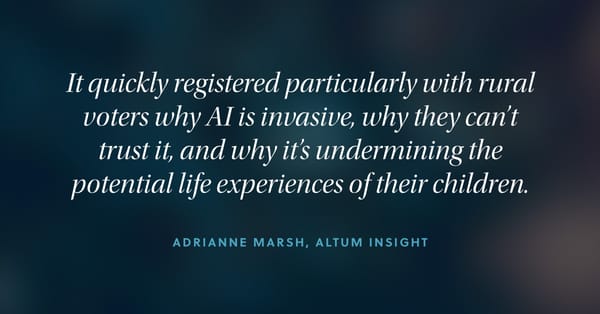
Altum Insight, a deep qualitative research firm specializing in narrative-based voter understanding, has released findings from a late November study of rural Nebraskans that uncovered unexpectedly acute fears about artificial intelligence, particularly around cultural influence, erosion of rural values, and threats to children.
“This study set out to understand how rural voters make sense of the political and economic challenges shaping their lives, especially issues like affordability,” said Frank A. Spring, Head of Research at Altum Insight. “We fell ass-backwards into profound concerns about AI and fears that neither party is prepared to protect them, their way of life, or their kids.”
The research highlights the strength and specificity of rural identity that see themselves as communities bound by shared values, mutual reliance, and protective instincts toward their cultural heritage. These attributes make rural communities deeply cohesive, but also difficult to reach or persuade from the outside once opinions are set. While participants expressed cynicism toward both parties, many felt Democrats dismiss or misunderstand their way of life more.
At the same time, Republican credibility on technology and consumer protections appears weakened by policy positions that prioritize rapid tech innovation and corporate interests. According to Spring, this dynamic may open space for Democrats to build trust if they connect their economic advocacy with responsiveness to emerging AI-driven fears.
“Hearing voters on affordability and responding as advocates allowed Democrats to make real gains,” Spring said. “But we can’t be a one-trick pony. Rebuilding trust in rural America requires listening, evolving, and meeting voters where their anxieties actually are. AI and tech concerns may be the next big opening to move that conversation forward.”
Altum Insight will continue probing this issue using its own AI-Moderated Interview tool to better understand the scope of these concerns across regions, age groups, and demographic segments. Watch the briefing and download the report PDF below.