Changing the way we win: the stairway model of behavioral change

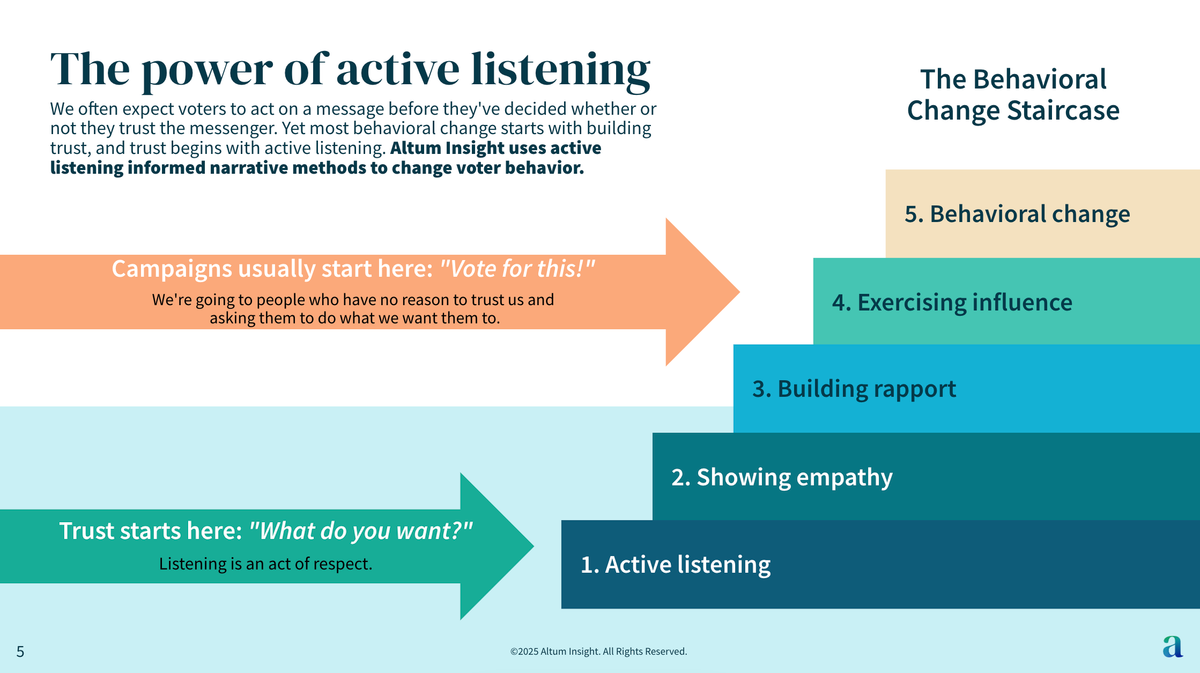
Altum Insight's second podcast unpacks the "Stairway Model of Behavior Change," a framework designed to move a person toward a specific action they wouldn't otherwise take. Originally developed by the FBI Crisis Negotiation Unit for hostage situations, the model consists of five distinct steps that must happen in order:
- Step 1: Active Listening: Allowing people to speak freely about their concerns in their own words, which makes them feel respected and validated.
- Step 2: Showing Empathy: Demonstrating a deep understanding of the voter's emotions and validating why they feel the way they do.
- Step 3: Building Rapport: Establishing common ground by showing that the campaign or candidate shares similar lived experiences and emotional reactions.
- Step 4: Exercising Influence: Proposing a solution or a alternative way of thinking without demanding immediate action, thereby respecting the voter's agency.
- Step 5: Behavioral Change: The final step where the actual ask is made (e.g., asking for a vote) after trust has been firmly established.
The whole process begins with active listening. As cohost Frank A. Spring noted:
"Active listening is a gesture of enormous respect to someone. You're willing to take your time, your attention, your energy, and, you know, ask them a few questions. Let them talk about what they care about in the way that they want to talk about it..."
While the Democratic Party and progressive movements have excelled at data modeling and operational mechanics, as cohost Adrianne Marsh points out, they have consistently failed to build long-term trust because they bypass the foundational steps of communication. Campaigns rarely engage in active listening or empathy; instead, they arrive late in the election cycle and immediately try to exercise influence. Too often, they overlook core constituencies (like Black, Latino, and rural voters) until the final months of an election, rather than taking the time to listen and build genuine trust.
This foundational misstep has significant implications for Democratic campaigns, and it's not to late to take a better approach for this fall. Don't miss this conversation on why we need to start listening more strategically: